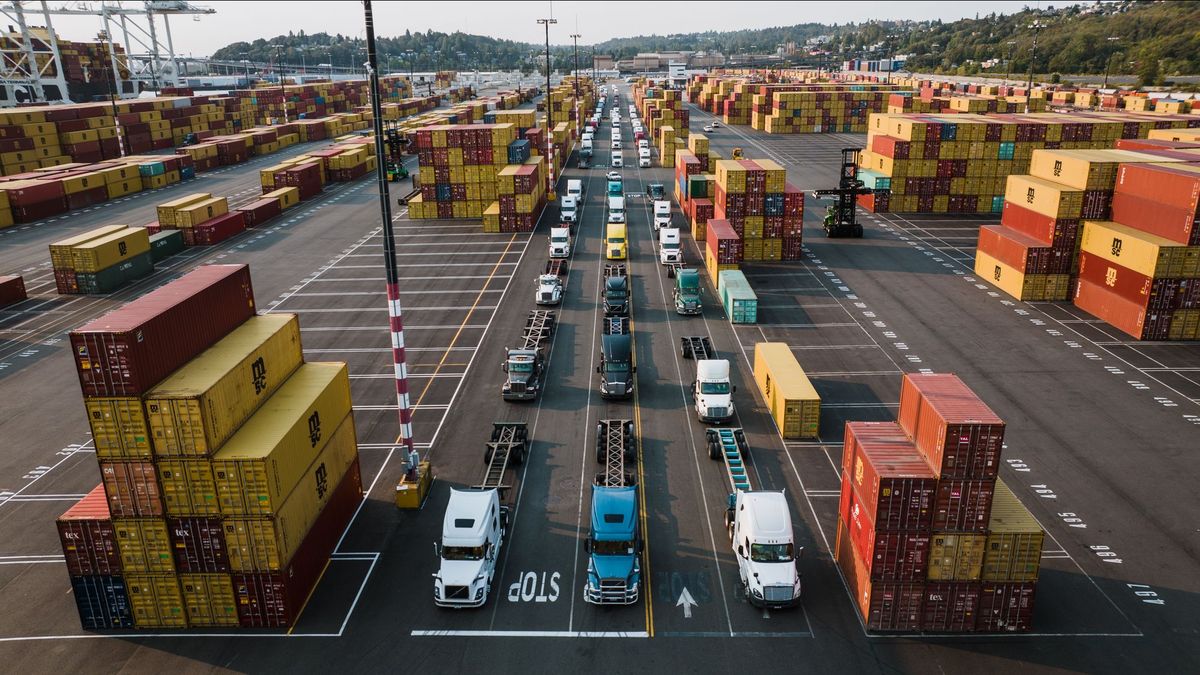
Inventory rarely holds steady all year. Peak seasons, harvests and promotions push space needs up and down, and planning ahead helps businesses avoid crowded buildings or rushed overflow deals.
When Cross Docking Makes Sense

SacramentoWarehouse.com
Table Of Content

Contact us anytime!
Cross Docking Suitability Starts With Timing
Cross docking moves freight from an inbound trailer to an outbound trailer with little or no storage in between. Cross docking suitability comes down to one test: does the freight already know where it is going when it arrives?
If it does, the dock can sort it and send it on within hours. If it does not, the freight sits. A cross dock is a poor place to sit.
What Happens on the Dock
An inbound trailer backs into a receiving door. Staff unload it, check counts and read labels. Then each pallet or carton moves across the floor to a lane that feeds an outbound door.
One inbound load may feed several outbound routes. Likewise, one outbound trailer may collect freight from several suppliers. The building works as a sorting point rather than a store. Because forklifts cross the same floor all day, the OSHA warehousing page is a useful reference for the hazards involved.
Freight With High Cross Docking Suitability
- Pallets or cartons labeled for a final destination before arrival
- Steady volume on regular lanes
- Advance notice of what each trailer holds
- Outbound trucks that can arrive soon after inbound ones
Retail replenishment is a common example. A supplier builds pallets for specific stores, and the dock simply redirects them.
Freight That Fits Poorly
Some freight resists cross docking. Goods that need inspection, relabeling or repacking slow the flow. Freight with uncertain demand needs storage, because nobody can assign it an outbound truck yet.
Irregular volume causes trouble too. A dock sized for ten trailers a day will jam if thirty arrive at once. For that reason, low cross docking suitability often shows up first as congestion, not as cost.
Information Comes First
Cross docking runs on data. The dock needs to know what is coming, when and where each piece goes. An advance shipping notice gives the dock that picture before the trailer arrives.
Appointments matter as much as labels. Inbound and outbound trucks have to arrive in an order that keeps the floor clear. The article on cross dock appointments explains how that scheduling works.
Testing Cross Docking Suitability
Start with a sample of real shipments. For each one, ask whether the outbound destination was known at arrival, whether the freight needed any work and how long it would have waited for an outbound truck.
A hypothetical housewares importer might find that 70 percent of its pallets were store ready on arrival and the rest needed labels. That split would suggest cross docking for most freight and storage or rework for the remainder. The numbers in that example are illustrative only; your own records give the real answer.