Inventory rarely holds steady all year. Peak seasons, harvests and promotions push space needs up and down, and planning ahead helps businesses avoid crowded buildings or rushed overflow deals.
What Freight Status Updates Mean

SacramentoWarehouse.com
Table Of Content

Contact us anytime!
How to Read Freight Status Updates
Freight status updates show where a shipment stands in the carrier’s network. Terms such as picked up, in transit, out for delivery and delivered appear on most tracking pages. Each carrier defines its own codes, so the same word can mean slightly different things from one carrier to the next.
Knowing the usual meaning helps you spot when to ask questions.
Common Freight Status Updates
- Picked up: the carrier has the freight
- In transit: the freight is moving between terminals
- At terminal: the freight is at a carrier facility
- Out for delivery: the freight is on a local truck
- Delivered: the receiver signed for it
- Exception: something interrupted the normal flow
These are general meanings. Check each carrier’s definitions for details.
What In Transit Can Hide
In transit covers a long stretch of time. A shipment may sit at a terminal waiting for a linehaul trailer while still showing in transit. So a status that does not change for a while is not always a problem, but it is worth a question.
Exceptions in Freight Status Updates
Exception codes in freight status updates flag problems: a missed delivery, a closed receiver, a wrong address, damage or a weather delay. Read the code and the note. Then call the carrier for detail if the note is unclear.
The article on freight redelivery explains what follows a failed attempt.
Delivered Does Not Mean Accepted
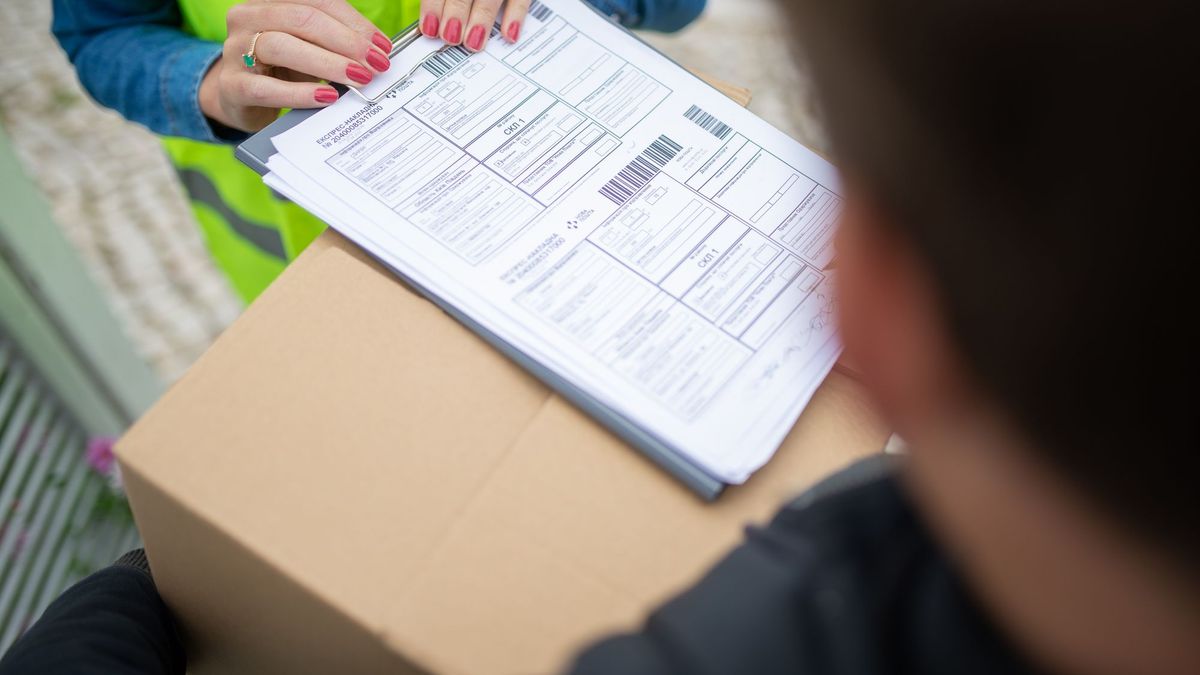
A delivered status means someone signed. It does not confirm the count or condition. Ask for the proof of delivery and check for exceptions noted at the dock.
The guide on the bill of lading explains how proof of delivery works.
Freight Status Updates and Timing
Carriers update statuses at scans. Gaps between scans can make freight look stuck when it is simply moving. Driver hours also affect timing, since federal hours of service rules limit driving and on duty time.
So plan around the carrier’s typical transit time, not the time between updates.
When to Ask Questions
Ask when an exception appears, when a status stays unchanged far longer than the usual transit time or when a delivered status does not match what the receiver reports.
For example, a hypothetical parts distributor whose shipment shows delivered might hear from the customer that nothing arrived. Asking the carrier for the signed proof of delivery and the delivery location quickly shows whether the freight went to the wrong dock. The guide on consolidated shipment tracking covers multi stop loads.